
By: Ephraim Success
The growing tension between the United States and several African countries is raising questions about diplomatic equality, international mobility and the future of tourism across the continent.
International travel has increasingly become more than a matter of booking flights, securing accommodation and obtaining visas. It is also influenced by diplomatic relationships, national security policies and the political decisions of governments. This reality is becoming particularly evident as several African countries respond to restrictive US immigration and visa policies with measures of their own.
Following the expansion of American travel restrictions affecting nationals of several African countries, some African governments have adopted reciprocal measures against American citizens. The development has introduced a new dimension to an already sensitive diplomatic relationship, raising questions about whether international mobility should operate on equal terms between nations.
What Triggered the Visa Dispute?
The latest development follows the expansion of US travel restrictions under Presidential Proclamation 10998, announced in December 2025 and implemented on January 1, 2026.
The policy introduced full and partial entry restrictions affecting nationals of 39 countries, including several African nations.
Countries facing full restrictions include Chad, Burkina Faso, Mali, Niger, Somalia, Sudan, South Sudan, Eritrea, Sierra Leone, Equatorial Guinea and the Republic of the Congo.
Other African countries, including Nigeria, Senegal, Tanzania, Zambia, Zimbabwe, Côte d’Ivoire, Angola and Benin, face partial restrictions affecting specified visa categories.
The US government justified the measures on national security and immigration grounds, citing concerns around identity verification, information sharing, visa overstays and cooperation on the repatriation of nationals.
Although the restrictions do not amount to a complete travel ban for every citizen of the affected countries, they have created additional barriers for people seeking to visit, study, work or immigrate to the United States.
Africa’s Response: The Principle of Reciprocity
For some African governments, the restrictions have raised concerns about unequal treatment in international relations. Their response has been to invoke the principle of diplomatic reciprocity, which broadly means that countries should be prepared to extend similar treatment to one another.
Chad was among the countries that took an early retaliatory step in June 2025, suspending visa issuance to American citizens following an earlier round of US restrictions.
The response became more pronounced following the expanded American measures.
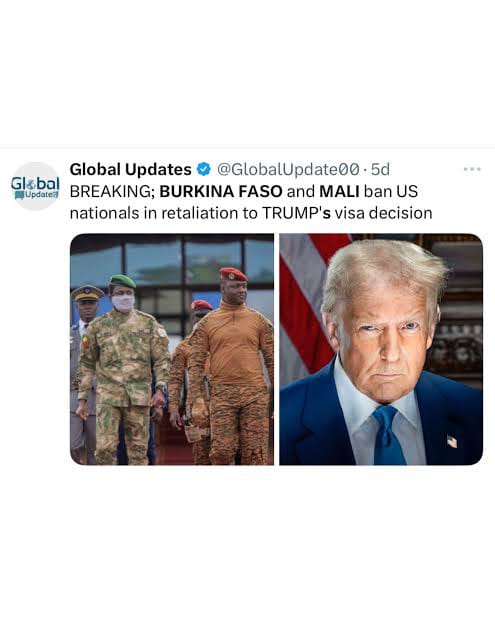
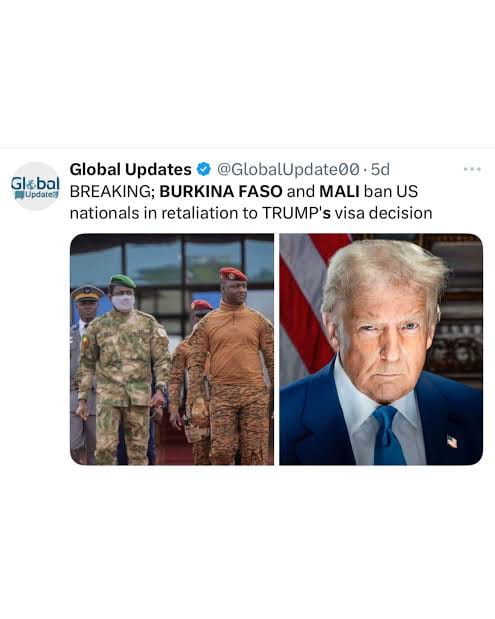
Niger announced restrictions on issuing visas to American citizens, while Mali and Burkina Faso also introduced reciprocal measures against US nationals.
These decisions reflect a growing willingness among some African governments to challenge what they perceive as one-sided international mobility arrangements.
However, it is important to recognise that these are individual national decisions rather than a unified African Union policy. Not every African country affected by American restrictions has responded with a visa ban against US citizens.
Why Are African Governments Taking This Position?
At the centre of the disagreement is the question of sovereignty and diplomatic equality.
For years, African travellers have faced demanding visa application procedures when attempting to visit several Western countries. These requirements can include extensive documentation, financial evidence, interviews, travel histories and lengthy processing periods.
Meanwhile, citizens of wealthier countries have often enjoyed comparatively easier access to many African destinations.
The recent developments have brought this imbalance into sharper focus.
For governments adopting reciprocal measures, the message is that African countries also have the authority to determine who enters their territories and under what conditions.
Beyond immigration policy, the situation also reflects wider geopolitical changes. Some African governments are becoming more assertive in their foreign policy decisions and are increasingly willing to challenge traditional diplomatic relationships.
What Does This Mean for International Tourism?
Although visa restrictions are political decisions, their consequences extend well beyond government offices. Tourism, aviation, education and international business are among the sectors that could experience the effects.
- Potential disruption to tourism
American travellers contribute to tourism economies across Africa through accommodation, guided tours, cultural experiences, hospitality and other travel-related activities.
If reciprocal restrictions make entry more difficult, some American visitors may reconsider their travel plans. This could affect African destinations that depend on international tourism revenue.
- Increased uncertainty for travel agencies
Travel agencies and tour operators may face additional challenges when advising customers about international travel requirements.
Visa policies can change quickly, making it essential for travel professionals to verify entry conditions before confirming bookings. Travellers may also need to reconsider connecting routes, visa arrangements and travel documentation.
- Possible effects on international aviation
Airlines depend on consistent passenger movement between countries. When visa restrictions discourage travel, demand on certain international routes could be affected.
Although visa restrictions do not automatically result in flight suspensions, prolonged diplomatic disagreements could influence passenger demand and international travel planning.
- Pressure on international business and investment
American businesses and investors travelling to African countries could encounter additional administrative requirements where reciprocal restrictions apply.
This could complicate business meetings, conferences, partnerships and investment activities, particularly where travel arrangements are time-sensitive.
What About Nigeria?
Nigeria occupies an important position in this discussion because it is one of Africa’s largest travel markets and is among the countries affected by the expanded US restrictions.
The restrictions affecting Nigerians cover specified visitor, student, exchange and immigrant visa categories, subject to applicable exceptions.
However, Nigeria has not adopted the same kind of broad reciprocal visa ban against American citizens as the countries mentioned earlier.
For Nigerian travellers, the immediate concern is understanding how the restrictions affect their individual visa applications and travel plans.
It is also important to understand that the policy does not mean every Nigerian is automatically prohibited from entering the United States. Existing visas, exemptions and individual circumstances can affect how the restrictions apply.
Could This Change the Future of African Travel?
The ongoing disagreement presents an opportunity for African countries to reconsider their broader approach to international mobility.
While reciprocal visa restrictions may communicate diplomatic displeasure, they can also create economic disadvantages for the countries imposing them.
A more sustainable long-term approach could involve strengthening regional African travel arrangements, improving visa processing systems, expanding international partnerships and negotiating more balanced mobility agreements.
For the African tourism industry, stronger intra-African travel could also provide opportunities to reduce dependence on a limited number of international source markets.
The continent has considerable tourism potential, from its wildlife destinations and historic cities to its beaches, mountains, cultural festivals and adventure experiences. Making travel between African countries easier could unlock more of this potential.
Final Thoughts
The growing visa dispute between the United States and some African countries represents more than a disagreement over immigration requirements. It highlights the complicated relationship between national security, diplomatic sovereignty and the freedom to travel.
As governments continue to reassess their international relationships, travellers and tourism businesses must pay closer attention to changing entry requirements and diplomatic developments.
Ultimately, international travel thrives when countries maintain cooperation, predictable immigration policies and mutually beneficial relationships. Whether the current situation leads to greater diplomatic confrontation or more balanced international mobility remains to be seen.
For travellers, one lesson is already clear: in today’s interconnected world, keeping up with visa policies is just as important as planning the journey itself.