
Category: Travel Trends | City Tourism | Travel Experiences
By: Global Convoy Travels and Tours
From illuminated landmarks and night markets to late-opening museums and evening food tours, discover why travellers are increasingly exploring cities after dark.
For generations, sightseeing followed a familiar routine.
Wake up early. Visit the landmarks. Explore museums and historic sites. Have lunch. Take a few photographs. Return to the hotel before the evening begins.
But that traditional travel schedule is changing.
Increasingly, travellers are discovering that a city does not stop being interesting when the sun goes down. In many destinations, the evening reveals a completely different side of the place.
Historic buildings become illuminated landmarks. Markets come alive. Restaurants fill with locals and visitors. Music spills onto the streets. Rooftops become viewpoints. Museums and heritage sites extend their opening hours. Even familiar attractions can feel completely different under the night sky.
This growing interest in after-dark experiences is increasingly described as night tourism or noctourism.
And in 2026, several factors are helping push the trend further, from changing traveller preferences and the search for more immersive experiences to extreme summer temperatures and destinations looking for better ways to spread visitors throughout the day.
WHAT IS NIGHT TOURISM?
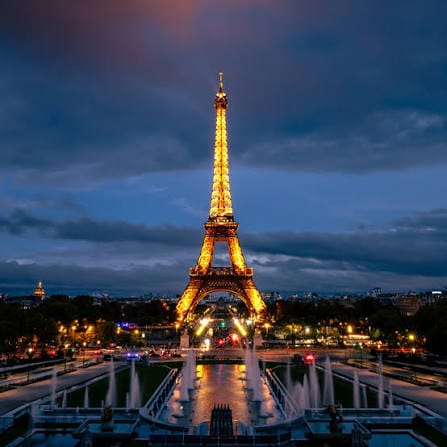
EIFFEL TOWER.
Night tourism is much broader than nightlife.
It refers to tourism experiences that take place during the evening and nighttime, including:
- Evening city tours
- Night markets
- Late-opening museums
- Illuminated landmarks
- Cultural performances
- Concerts and festivals
- Night food tours
- Rooftop dining
- Night photography
- Evening river cruises
- Stargazing
- Night safaris
- After-dark heritage experiences
A traveller can therefore participate in night tourism without ever visiting a nightclub.
They could spend an evening walking through a historic neighbourhood, visiting a museum, eating local food and watching a cultural performance.
The attraction is not necessarily the nightlife.
It is the city itself after dark.
WHY ARE TRAVELLERS CHOOSING THE NIGHT?
There is no single explanation for the rise of night travel.
Several changes in the way people travel are coming together.
- THE NIGHT OFFERS A DIFFERENT EXPERIENCE
Cities change after sunset.
A historic building that looks impressive in daylight can become dramatic when illuminated. A busy neighbourhood can develop an entirely different atmosphere. A waterfront that feels ordinary during the afternoon can become one of the most beautiful places in the city at night.
For travellers who have already seen thousands of photographs of a destination online, exploring after dark offers an opportunity to see something different.
The same city can effectively provide two experiences:
The daytime city.
The nighttime city.
- CLIMATE IS CHANGING WHEN PEOPLE SIGHTSEE
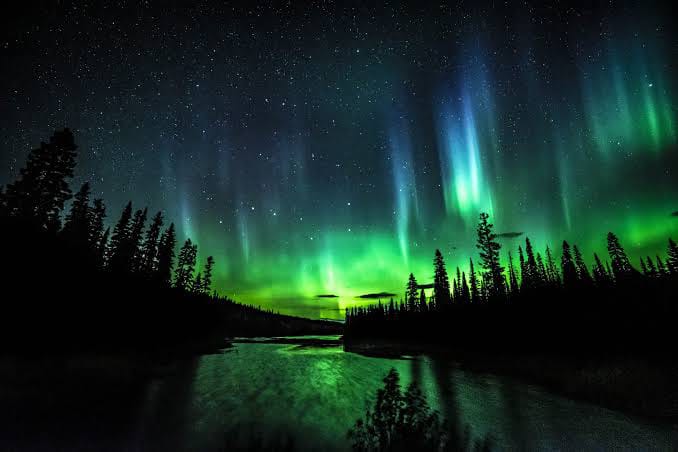
NORTHERN LIGHTS.
One of the most important developments influencing night tourism is rising heat.
Extreme summer temperatures are becoming an increasingly important consideration for travellers visiting warm destinations.
Italy provided a striking example during the 2026 summer season.
With temperatures reaching around 40°C in parts of the country, tourists in Rome increasingly shifted sightseeing towards the evening. Major attractions, including the Colosseum and Pantheon, extended their opening hours, while other historic sites also introduced or expanded nighttime access.
The Colosseum’s director said the extended evening openings had proved highly popular, with the additional nights selling out.
This suggests that night tourism is not simply about entertainment.
For some travellers, it is becoming a practical response to hotter conditions.
Instead of spending hours walking around an exposed archaeological site during the hottest part of the day, visitors can rest during the afternoon and explore later when temperatures are more manageable.
- DESTINATIONS ARE OPENING THEIR DOORS LATER
Traveller behaviour is also influencing destinations.
Museums, archaeological sites and heritage attractions are increasingly experimenting with evening opening hours.
Italy’s 2026 summer programme illustrates this shift. In addition to the Colosseum, the Pantheon, Caracalla’s Baths, Pompeii and other sites have offered evening access at various times, while Florence’s Uffizi Gallery has introduced nighttime access to the Vasari Corridor on selected occasions.
This creates a new cycle in tourism:
Travellers want evening experiences → destinations extend their hours → businesses create more nighttime activities → travellers have more reasons to explore after dark.
The result is a tourism day that no longer necessarily ends at sunset.
- NIGHTTIME CAN HELP SPREAD TOURISM
Overtourism has become an important issue for many major destinations.
Popular attractions can become extremely crowded during peak daytime hours.
Extending operating hours into the evening can provide destinations with another opportunity to distribute visitor numbers across a longer period.
Italy’s tourism minister specifically highlighted the potential of evening openings to help spread visitor numbers while allowing travellers to experience historic sites during cooler hours.
Night tourism is therefore becoming relevant not only to travellers but also to destination managers.
It can potentially help cities make better use of their existing tourism infrastructure.
THE CITY AFTER DARK BECOMES THE ATTRACTION
Some destinations have long been famous for their nighttime identity.
Think of Paris after sunset, when the Eiffel Tower becomes illuminated against the night sky.
Think of Tokyo, where districts such as Shibuya and Shinjuku take on a distinctive energy after dark.
Think of Dubai, where illuminated skyscrapers, waterfronts and entertainment districts create an entirely different visual landscape at night.
Think of New York, where Times Square, Broadway and the Manhattan skyline create a completely different experience after sunset.
And think of Lagos, where restaurants, live music, entertainment and nightlife contribute to the city’s vibrant evening culture.
In these destinations, the attraction is not necessarily one landmark.
It is the atmosphere of the city itself.
NIGHT MARKETS ARE PART OF THE EXPERIENCE
Food is another major reason travellers venture out after dark.
Night markets can combine food, shopping, entertainment and social interaction in one experience.
For visitors, they can provide something a conventional restaurant may not always offer: a stronger sense of local atmosphere.
Street food vendors, music, lights, local products and crowds create an environment that becomes part of the attraction.
For destinations with strong food cultures, night markets can therefore become valuable tourism products.
CULTURE DOES NOT END AT SUNSET
Night tourism also creates opportunities for cultural tourism.
Many performances, concerts, festivals, theatre productions and cultural celebrations take place in the evening.
This allows visitors to experience destinations through their people and traditions rather than simply through monuments.
Nigeria has particularly strong potential in this area.
Music, entertainment, food and cultural events already play an important role in the country’s evening economy.
A Lagos itinerary, for example, could combine:
Daytime: Museums, galleries and heritage attractions.
Evening: Nigerian cuisine, live music and cultural entertainment.
This creates a more complete experience and allows travellers to experience different sides of the destination.
NIGHT TRAVEL CAN CREATE MORE ECONOMIC OPPORTUNITIES
The benefits of night tourism can extend beyond the attractions themselves.
A traveller who normally returns to their hotel at 6 p.m. may instead spend another four or five hours exploring the city.
During that time, they might spend money on:
- Restaurants
- Cafés
- Transportation
- Entertainment
- Cultural performances
- Shopping
- Guided tours
- Museums and attractions
This gives local businesses an opportunity to participate in the visitor economy for longer hours.
For cities, therefore, night tourism can be more than a lifestyle trend.
It can become an additional component of the tourism economy.
THE RISE OF NIGHTTIME EXPERIENCES
Night travel is also becoming more diverse.
Travellers are no longer limited to bars, clubs and restaurants.
They can choose from experiences such as:
NIGHT CITY WALKS
Guided walks through historic neighbourhoods and illuminated city centres.
NIGHT FOOD TOURS
A journey through local street food, markets and restaurants.
NIGHT PHOTOGRAPHY
Tours designed around capturing landmarks and cityscapes under artificial light.
EVENING CRUISES
River, harbour and canal cruises offering nighttime views of a city.
NIGHT SAFARIS
Wildlife experiences that reveal animal behaviour that cannot be observed during the day.
STARGAZING
Travelling outside brightly lit cities to experience the night sky.
The International Astronomical Union’s Office of Astronomy for Development has also highlighted astrotourism as an opportunity for tourism operators to build experiences around the night sky, including food, culture and wellness activities.
This demonstrates how broad the concept of night tourism has become.
SOCIAL MEDIA IS CHANGING THE NIGHTTIME TRAVEL EXPERIENCE
Social media has also played a role.
Travellers increasingly discover destinations through short videos and photographs rather than traditional travel brochures.
And nighttime environments are particularly visual.
Illuminated skylines, neon streets, night markets, rooftop views and cultural performances can produce highly shareable content.
A traveller may see a video of a city at night and become curious about experiencing it personally.
This creates another travel cycle:
See it online → become curious → visit → create content → inspire another traveller.
NIGHT TOURISM ALSO HAS CHALLENGES
The growth of nighttime travel is not without complications.
A city that becomes more active after dark must consider:
- Public safety
- Reliable transportation
- Street lighting
- Emergency services
- Noise
- Waste management
- Crowd control
- Environmental impacts
- The needs of local residents
Research on nighttime tourism has highlighted issues including energy consumption, artificial lighting and environmental disruption.
Night tourism therefore needs to be managed responsibly.
Simply keeping attractions open later does not automatically create a successful tourism experience.
Destinations need to ensure that visitors can move around safely and that local communities are not negatively affected.
SAFETY MATTERS AFTER DARK
Travellers also need to approach nighttime exploration responsibly.
Before heading out, visitors should understand local transportation options, know how they will return to their accommodation and stay aware of their surroundings.
Travellers unfamiliar with a destination may also benefit from organised evening tours, particularly when visiting areas they do not know well.
For travel companies, this creates an opportunity to provide structured nighttime experiences with transportation, guides and carefully planned itineraries.
WHAT NIGHT TOURISM MEANS FOR TRAVEL COMPANIES
The trend creates new possibilities for travel agencies and tour operators.
Instead of ending an itinerary after dinner, companies can build dedicated evening experiences.
For example:
CITY LIGHTS EXPERIENCE
A guided tour of illuminated landmarks and viewpoints.
NIGHT FOOD EXPERIENCE
A culinary journey through local markets and restaurants.
EVENING CULTURE EXPERIENCE
Museums, performances, heritage sites and local entertainment combined into one itinerary.
SUNSET-TO-NIGHT EXPERIENCE
A package beginning with sunset sightseeing and continuing into dinner and evening activities.
NIGHT PHOTOGRAPHY EXPERIENCE
A guided photography tour focused on the city’s landmarks after dark.
These experiences can add another dimension to conventional city breaks.
THE FUTURE OF NIGHT TRAVEL
The growth of night tourism reflects a broader change in travel.
Travellers increasingly want experiences rather than simply ticking famous landmarks off a checklist.
They want to discover how cities actually live.
They want to eat where locals eat.
They want to hear local music.
They want to explore neighbourhoods.
They want to photograph illuminated landmarks.
And in hotter destinations, they may increasingly want to avoid the most intense daytime temperatures.
For destinations, that means the traditional tourism day is becoming more flexible.
The question is no longer simply:
“What can tourists do here?”
It is increasingly:
“What can tourists experience here after sunset?”
CONCLUSION: THE CITY DOESN’T STOP WHEN THE SUN GOES DOWN
For a long time, sunset marked the end of sightseeing.
That idea is changing.
Across the world, travellers are discovering that cities have another personality after dark.
Some are motivated by nightlife. Others want food, culture, photography, entertainment or simply the opportunity to see familiar landmarks from a different perspective.
Climate is also becoming an important factor, with Italy’s 2026 late-night opening initiatives demonstrating how destinations are adapting tourism to extreme summer heat.
Night tourism is therefore not just about staying out late.
It is about reimagining when and how we experience a destination.
The city you explored at noon may look completely different at midnight.
And sometimes, the most memorable part of a journey begins when the sun goes down.
The sun may set, but the adventure doesn’t have to.