By Ephraim Success
There are places in Nigeria whose historical significance is hidden in plain sight. They are often overshadowed by more popular attractions, forgotten as cities develop, or reduced to ordinary structures that people pass without giving a second thought to the stories they hold.
In Abeokuta, Ogun State, one such place is Gada Aro Bridge.
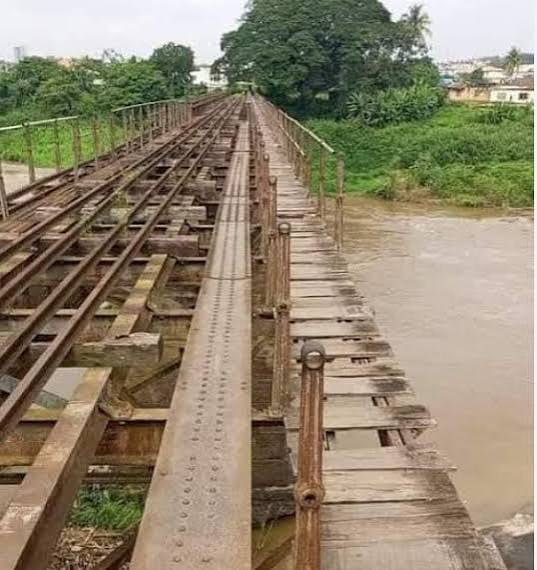
To many residents, it is simply a crossing connecting communities around Oriyanrin and Agbeloba to Ita-Oshin. To others, it is an ageing structure that has gradually lost its usefulness. But beyond its present condition lies a much bigger story: one that connects Abeokuta’s colonial-era transportation history, commercial development and urban evolution.
Gada Aro is more than an old bridge. It is a surviving reminder of a period when transportation infrastructure played a significant role in shaping the city. And perhaps, with the right attention, it could become one of Abeokuta’s lesser-known historical attractions.
For a city already recognised for its cultural identity, historical landmarks and distinctive heritage, the question is worth asking: why has Gada Aro not received the recognition it deserves?
A Bridge That Carries More Than History
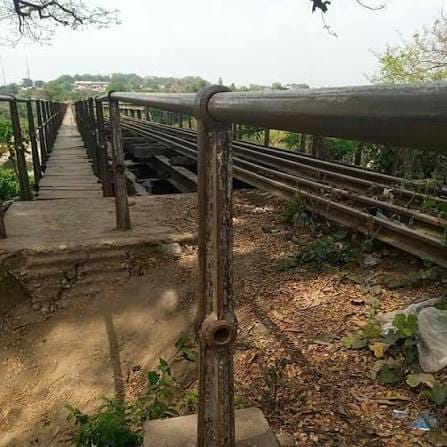
The history of Gada Aro is closely connected to the development of railway transportation in Abeokuta.
According to a statement presented before the Ogun State House of Assembly in 2026, the bridge was constructed by the British Colonial Administration between 1898 and 1901. It served as a link to the old Panseke/Ibara Railway Terminus through the Oriyanrin-Agbeloba area.
This places the bridge within a significant period in Abeokuta’s transportation history, when railway development was changing how people and goods moved between communities.
Before the railway became an important transportation option, movement between Abeokuta and Lagos depended considerably on waterways and established trade routes. River transportation could be difficult, particularly during seasonal changes, making the movement of agricultural produce and other commodities unpredictable.
Rail transportation offered a more reliable alternative.
Historical research on Abeokuta’s development explains that the railway connection between Lagos and Abeokuta was driven partly by the need to improve the movement of agricultural products, including palm kernels, palm oil, cotton, yam flour and maize.
The railway was not simply about moving passengers. It was part of a wider economic transformation.
Gada Aro therefore represents an important part of the infrastructure that supported this changing transportation system.
Its historical significance is not necessarily found in its size or architectural grandeur, but in the role it played within a much larger story of movement, trade and urban development.
When Infrastructure Becomes Heritage
One of the unfortunate realities of historical preservation in Nigeria is that many structures are only recognised for their immediate usefulness.
Once they stop serving their original purpose, they are frequently abandoned, modified or left to deteriorate.
Gada Aro appears to have experienced a similar fate.
Following the relocation of the railway station to Lafenwa, the bridge gradually lost the importance it once held within the transportation network. Over time, it became a pedestrian crossing rather than the significant transportation link it had originally been.
However, the loss of its former transportation function does not erase its historical value.
In fact, this is precisely where its potential as a heritage attraction begins.
Across the world, former railway structures, historic bridges, abandoned stations and industrial facilities have been preserved and transformed into cultural attractions. They offer visitors opportunities to understand how cities developed, how communities interacted and how earlier generations navigated their environments.
Gada Aro could tell a similar story about Abeokuta.
It could become a physical reminder of the city’s transportation evolution, providing a connection between its past and present generations.
Rather than allowing its history to disappear alongside its original function, Abeokuta has an opportunity to preserve and reinterpret it.
The Danger of Losing a Piece of Abeokuta’s Past
Unfortunately, the conversation surrounding Gada Aro today is no longer limited to historical preservation. Its deteriorating condition has become a serious public safety concern.
In July 2026, the Ogun State House of Assembly called on the state government to urgently reconstruct and upgrade the bridge.
During the proceedings, lawmakers raised concerns about its deteriorated condition, explaining that it had become a pedestrian crossing supported by improvised wooden planks and iron materials.
The bridge remains an important route for residents, particularly primary and secondary school students travelling between Oriyanrin, Agbeloba and Ita-Oshin.
The Assembly also highlighted reports of pedestrians falling into the river after sections of the makeshift crossing gave way.
This situation presents two important concerns.
First, the immediate safety of the people who depend on the bridge must be addressed. No historical or tourism ambition should take priority over the safety of residents.
Second, the deterioration raises a broader question about how Abeokuta identifies, protects and manages structures with historical significance.
A structure does not have to be a palace, museum or monument to deserve preservation. Sometimes, the most valuable pieces of a city’s history are found in ordinary places whose significance is gradually forgotten.
Gada Aro deserves to be examined through that wider perspective.
Could Gada Aro Become a Tourist Attraction?

The answer is yes, provided that its development is approached thoughtfully.
Abeokuta already has established attractions, including Olumo Rock, the Egba Museum, historic traditional institutions and the Adire market. These destinations offer visitors different ways to experience the city’s culture, history and identity.
However, tourism development should not be limited to attractions that are already famous.
There is considerable value in identifying lesser-known heritage locations and incorporating them into a broader tourism experience.
Gada Aro could potentially become part of that effort.
Here are some ways its tourism potential could be explored:
- A Historical Heritage Site
The bridge could be preserved as a historical landmark, with appropriate restoration and interpretation.
Informational displays could explain its construction period, its connection to the old railway terminus and its contribution to Abeokuta’s transportation history.
Visitors should be able to understand why the structure matters rather than simply arrive, take photographs and leave.
- A Railway and Transportation Heritage Experience
One of the most interesting possibilities is developing a small heritage experience around Abeokuta’s railway history.
Gada Aro could serve as one of the stops on a guided historical tour exploring the development of transportation in the city.
The experience could connect the bridge’s story with archival photographs, railway records, oral histories and other surviving historical locations associated with the old railway network.
This would give visitors a more comprehensive understanding of how Abeokuta evolved.
- A Cultural and Educational Tourism Destination
Schools, universities, researchers and history enthusiasts could benefit from guided educational visits to the location.
Students could learn about colonial-era infrastructure, the development of railway transportation, local commerce and the importance of preserving historical structures.
Such visits would also encourage younger generations to appreciate the history surrounding their communities.
- A Photography and Heritage Exploration Location
With proper restoration, landscaping, safety measures and appropriate visitor facilities, Gada Aro could become an interesting location for heritage photography and cultural exploration.
Its historical character could offer photographers, content creators and visitors a different perspective of Abeokuta.
The objective should not be to turn it into an artificial tourist attraction but to preserve its original identity while making it accessible and meaningful to visitors.
- A New Addition to Abeokuta’s Heritage Tourism Circuit
Perhaps its greatest potential lies in its ability to complement existing attractions.
Imagine a guided Abeokuta heritage tour that takes visitors beyond the familiar destinations.
After exploring Olumo Rock and learning about the history of Egbaland, visitors could discover Gada Aro and understand another dimension of the city’s development.
This would encourage longer and more engaging tourism experiences while introducing visitors to locations they might otherwise never discover.
What Must Happen Before Tourism Development?
Recognising Gada Aro’s tourism potential does not mean immediately opening it to visitors.
Its current condition requires urgent attention.
Any proposed transformation must begin with a professional structural assessment, followed by the necessary reconstruction or restoration to ensure public safety.
There should also be historical documentation to establish the bridge’s origins, original design, construction materials and relationship with the former railway infrastructure.
Local historians, heritage professionals, engineers, community leaders and government institutions should be involved in the process.
Where possible, restoration should retain historically significant features rather than replacing the entire structure with a modern design that removes its heritage character.
There is also an opportunity to involve residents of Oriyanrin, Agbeloba and neighbouring communities in the process.
Their knowledge, experiences and oral accounts could help preserve stories that may not exist in official historical records.
Furthermore, the Ogun State Government, through its tourism and cultural institutions, could explore whether Gada Aro qualifies for formal heritage recognition and develop a sustainable management plan.
Tourism development should create value for the surrounding community through local guides, small businesses, cultural experiences and other economic opportunities.
Most importantly, preservation must be accompanied by long-term maintenance. Restoring a historical structure without a plan for its continued protection would only postpone another cycle of neglect.
Abeokuta Must Look Beyond Its Famous Attractions
Abeokuta has a rich historical and cultural identity, but its tourism potential should not be measured only by the number of visitors who travel to Olumo Rock or other established attractions.
There are countless stories embedded in the city’s streets, buildings, markets, communities and infrastructure.
Some are celebrated. Others remain largely unexplored.
Gada Aro presents an opportunity to rethink what qualifies as a tourist attraction and how lesser-known historical assets can contribute to destination development.
It also highlights an important principle: tourism is not always about constructing something new. Sometimes, it begins with recognising the value of what already exists.
For Global Convoy Travels, discovering destinations should go beyond visiting popular locations. It should also involve exploring the stories, people and historical landmarks that give places their unique identities.
Gada Aro may currently be remembered by many as a deteriorating pedestrian bridge. But its story suggests that it could represent something much greater: a connection to Abeokuta’s past and an opportunity to create a more diverse heritage tourism experience.
The bridge deserves more than temporary attention whenever its condition becomes a public concern.
It deserves proper documentation, preservation and a place in the wider conversation about Abeokuta’s heritage.
Perhaps the next important historical attraction in Abeokuta is not waiting to be discovered somewhere new. Perhaps it has been standing there all along, waiting for someone to recognise its story.