
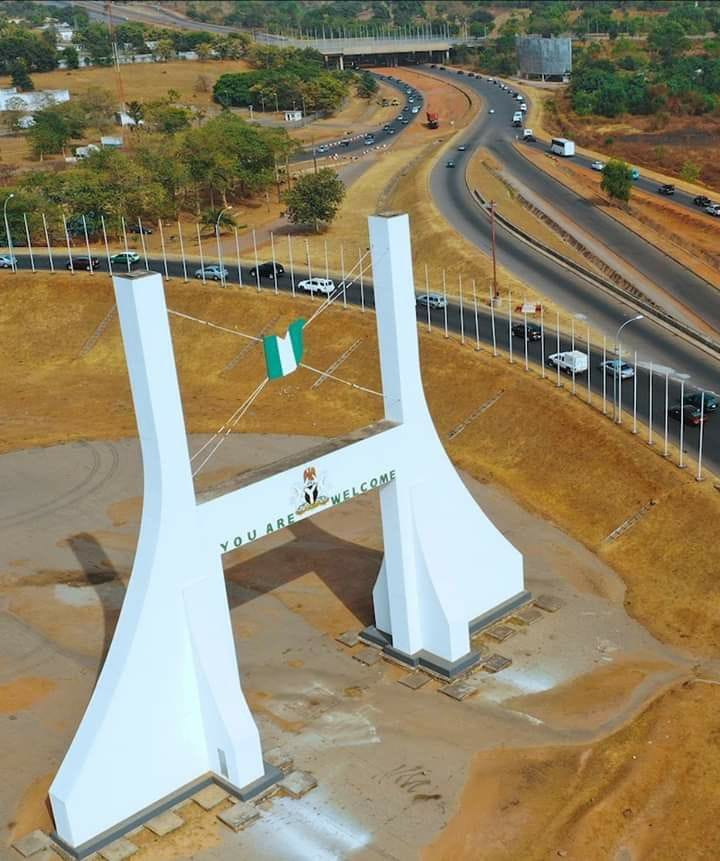
Category: Nigerian tourism industry | Travel News
By: Ephraim Success
_____________________________________________________________________________________________________
Nigeria has the people, culture, landscapes and economic potential to become one of Africa’s leading tourism destinations. But potential alone does not build a tourism powerhouse. The real question is whether the country is ready to turn its extraordinary assets into a competitive, accessible and sustainable tourism industry.
For decades, Nigeria’s global identity has been shaped largely by its population, oil and gas industry, business activity, entertainment industry and growing technology ecosystem. Tourism, despite its enormous possibilities, has rarely received the same level of international attention.
That may be changing.
Across Africa, tourism is gaining renewed momentum. The continent recorded approximately 74 million international tourist arrivals in 2024, 7% above 2019 levels and 12% higher than in 2023, according to the International Civil Aviation Organization (ICAO).
At the same time, destinations such as Morocco, Egypt, Kenya, Tanzania, Rwanda, Mauritius and South Africa continue to demonstrate that tourism can become a major contributor to national economies.
Nigeria has many of the ingredients required to join that group.
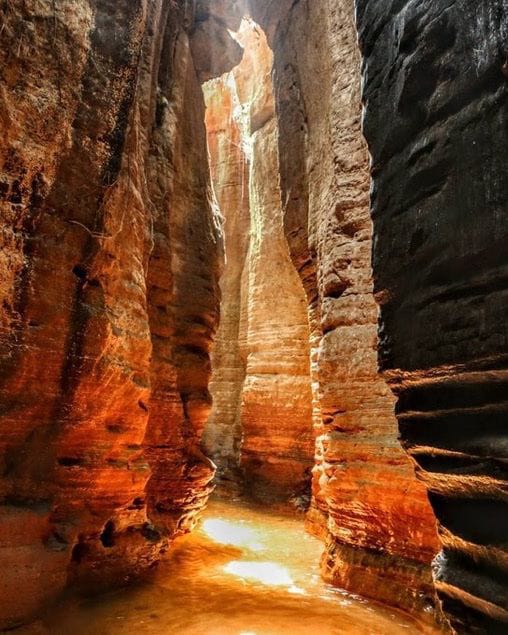
AWHUM WATERFALL AND CAVE.
It has extraordinary cultural diversity, hundreds of ethnic communities, historic cities, beaches, mountains, forests, waterfalls, wildlife, festivals, cuisine, music, fashion and one of Africa’s most influential entertainment industries.
The challenge is turning those ingredients into a tourism product that is easy to discover, easy to book, safe to experience and memorable enough to make visitors return.
Nigeria Has What Many Destinations Spend Millions Trying to Create
The first reason Nigeria has genuine tourism potential is simple: the country is incredibly diverse.
A traveller can experience completely different landscapes and cultures without leaving the country.
There are the beaches and coastal experiences of Lagos and Akwa Ibom. There are the historic landscapes of Abeokuta, Benin City, Kano and other parts of the country. There are mountains and highlands in places such as Plateau and Cross River States. There are waterfalls, caves, forests, rock formations, national parks and cultural sites scattered across the country.
Then there is Nigeria’s intangible tourism wealth.
Food.
Music.
Fashion.
Dance.
Religion.
Festivals.
Traditional architecture.
Craftsmanship.
Storytelling.
History.
These are not resources that can simply be copied by another destination.
They are part of Nigeria’s identity.
The opportunity, therefore, is not necessarily to create something completely new. It is to package what already exists into experiences that travellers can understand, access and purchase.
Culture Could Become One of Nigeria’s Greatest Tourism Assets

THE EYO MASQUERADE.
Nigeria’s cultural influence already extends far beyond its borders.
Afrobeats has become an international phenomenon. Nigerian films have built audiences around the world. Nigerian fashion designers increasingly participate in international fashion conversations. Nigerian food continues to gain visibility globally.
This creates an unusual tourism opportunity.
People may first discover Nigeria through its music, films, food or fashion and eventually become interested in experiencing the country itself.
This is the foundation of what is often called cultural and experiential tourism.
A visitor may not simply want to see a monument. They may want to attend a Nigerian festival, learn how traditional food is prepared, visit an artisan market, experience local music, explore historical communities or participate in a cultural celebration.
Nigeria’s entertainment industry could therefore become a gateway into its tourism industry.
The question is whether the tourism sector is prepared to take advantage of that connection.
The Tourism Economy Is Bigger Than Hotels and Attractions

THE LONGEST CANOPY WALK IN AFRICA.
One of the biggest misconceptions about tourism is that its benefits are limited to hotels, airlines and tourist attractions.
They are not.
Tourism connects visitors with restaurants, transport companies, tour operators, photographers, event organisers, artisans, farmers, retailers, entertainers, guides, technology companies and countless small businesses.
The World Bank describes tourism as an engine of job creation and economic development because spending by visitors moves through extensive local supply chains, creating opportunities for businesses and communities beyond traditional tourism companies.
This is particularly important for Nigeria.
A successful tourism destination does not only bring international visitors into the country. It also encourages Nigerians to explore Nigeria.
A family travelling from Lagos to Abeokuta, a group visiting Calabar during a festival, a couple spending a weekend in a resort, or a group exploring northern Nigeria all contribute to the domestic tourism economy.
That means Nigeria does not have to wait for millions of international tourists before tourism becomes economically meaningful.
Domestic tourism can be the foundation. International tourism can then build on it.
Nigeria’s Population Is Also a Tourism Opportunity
Nigeria’s population is another potential advantage.
With more than 237 million people in 2025, according to World Bank data, Nigeria has one of the world’s largest consumer markets.
That represents a substantial potential domestic travel market.
The Nigerian tourism industry therefore has two markets to develop simultaneously:
Nigerians travelling within Nigeria and international visitors travelling to Nigeria.
The first can provide resilience for tourism businesses, while the second can generate foreign exchange, international visibility and investment.
But this requires tourism products that appeal to different segments.
Family holidays.
Weekend getaways.
Adventure tourism.
Luxury travel.
Business events.
Religious tourism.
Cultural tourism.
Food tourism.
Wellness retreats.
Beach holidays.
Wildlife experiences.
Heritage tourism.
Festival tourism.
Nigeria has the raw materials for many of these categories.
But Potential Is Not the Same as Competitiveness
This is where the conversation becomes more difficult.
Nigeria’s tourism potential is undeniable. Its tourism competitiveness, however, still has significant room for improvement.
A World Bank tourism snapshot using the World Economic Forum’s Travel & Tourism Development Index places Nigeria at 112th out of 119 economies in the 2024 index, with a score of 3.18. The same snapshot estimates tourism’s contribution to Nigeria’s GDP at 3.7% in 2023 and its contribution to employment at 2.9%.
These figures illustrate the gap between Nigeria’s potential and its current level of tourism competitiveness.
Nigeria does not have a shortage of attractions.
It has a shortage of consistent tourism infrastructure, accessibility, product development, visitor confidence, marketing and destination management at the scale required to compete globally.
That distinction is critical.
The Infrastructure Question
A world-class attraction cannot succeed if reaching it is unnecessarily difficult.
Tourists need reliable roads, airports, rail connections, accommodation, sanitation, telecommunications, signage, visitor centres and dependable transportation.
Tourism is ultimately a chain.
If one major part of the chain fails, the entire experience can suffer.
A beautiful destination with poor roads may struggle to attract visitors.
A world-class hotel in an inaccessible location may struggle to fill its rooms.
An impressive cultural attraction without professional guides, signage or visitor information may fail to communicate its value.
And an international visitor who has difficulty moving around a destination may decide not to return.
This is why tourism development must be treated as an ecosystem rather than a collection of isolated attractions.
Aviation Will Determine How Competitive Nigeria Can Become
Tourism and aviation are inseparable.
A country cannot become a major international tourism destination without sufficient air connectivity.
ICAO has repeatedly emphasised the connection between aviation connectivity and tourism development. Its 2025 ministerial conference on tourism and air transport in Africa highlighted connectivity, policy reform, investment, visa facilitation and intra-African travel as major priorities for unlocking tourism growth.
Nigeria is already an important aviation market in West Africa, but becoming a tourism powerhouse requires more than having international airports.
Visitors need competitive routes, reliable schedules, efficient airport experiences, smooth immigration procedures and convenient connections between major cities and tourism destinations.
Greater regional connectivity would also be important.
A traveller visiting Lagos should ideally be able to connect easily with other Nigerian destinations and potentially combine Nigeria with neighbouring West African countries.
That is where initiatives such as the Single African Air Transport Market (SAATM) become particularly relevant. Greater implementation of regional aviation liberalisation could make intra-African travel easier and create new opportunities for tourism businesses.
Visa and Border Experience Matter
For many international travellers, the tourism experience begins before they arrive.
It begins with the visa application.
A complicated, expensive or uncertain visa process can discourage potential visitors before they have even purchased a ticket.
African tourism policymakers have increasingly recognised the importance of simplifying travel across the continent. At the 2025 UN Tourism/ICAO ministerial conference, African leaders highlighted simplified and more affordable visa regimes, fast-track procedures and longer-validity multiple-entry visas as important measures for tourism growth.
Nigeria therefore has an opportunity to make the visitor journey more seamless.
The easier it becomes for legitimate tourists to understand entry requirements, obtain visas where necessary, navigate airports and move through the country, the more attractive Nigeria becomes as a destination.
Security and Visitor Confidence Cannot Be Ignored
There is another issue that cannot be avoided in any serious discussion about Nigerian tourism: security.
Tourists make decisions based not only on what they want to see but also on how safe and comfortable they expect to feel.
Nigeria’s security situation varies significantly from one region to another, meaning the country should not be treated as a single tourism environment.
A stronger tourism strategy would therefore involve clear destination management, reliable visitor information, professional tourist police or security coordination where appropriate, emergency support systems and transparent communication.
Tourism thrives on confidence.
Visitors need to know where they are going, how they will get there, who will assist them and what to do if something goes wrong.
Nigeria Also Needs to Tell a Better Tourism Story
Perhaps one of Nigeria’s biggest tourism challenges is not the absence of attractions.
It is visibility.
There are destinations in Nigeria that many Nigerians themselves know very little about.
That means the international market is even less likely to discover them.
Nigeria needs destination marketing that is consistent, professional and targeted.
Instead of simply saying:
“Come to Nigeria.”
The country needs to communicate specific experiences.
Come to Nigeria for the music.
Come for the food.
Come for the festivals.
Come to explore the Yoruba culture.
Come to experience the landscapes of Cross River.
Come for the beaches.
Come for the arts.
Come for Nigerian fashion.
Come for adventure.
Come for business and extend your stay.
Come to discover a different side of Africa.
Modern travellers increasingly choose destinations because of specific experiences rather than simply because a country exists on a map.
Nigeria’s tourism marketing needs to reflect that shift.
Social Media Could Be One of Nigeria’s Biggest Advantages
Nigeria has something many destinations would love to have: a highly active digital culture.
Travel discovery increasingly happens through social media.
A short video can introduce millions of people to a destination.
A food video can inspire someone to visit a country.
A festival clip can create international curiosity.
A travel creator can turn an unknown attraction into a trending destination.
Nigeria already has a strong creative economy, which means tourism marketers can collaborate with filmmakers, photographers, musicians, influencers and storytellers to build destination awareness.
But the objective should not simply be to make attractions viral.
The real objective is to convert attention into arrivals.
That means every successful tourism campaign should have a pathway from discovery to information, booking and actual travel.
The Private Sector Has a Major Role to Play
Government cannot build Nigeria’s tourism industry alone.
The private sector must be part of the equation.
Hotels need to invest.
Tour operators need to create professional experiences.
Airlines need to improve connectivity.
Technology companies can simplify bookings.
Banks and financial institutions can support tourism businesses.
Investors can develop resorts and attractions.
Telecommunications companies can improve connectivity.
Restaurants can develop destination-worthy culinary experiences.
And travel agencies can package these different services into products that visitors can actually buy.
Tourism is therefore an industry that depends on collaboration.
The government creates an enabling environment.
The private sector develops products.
Communities protect and participate in the tourism economy.
Travellers provide demand.
And destination marketers connect all of them.
Communities Must Be at the Centre of Tourism Development
There is another important lesson Nigeria can learn from successful tourism destinations: local communities must benefit.
Tourism should not turn communities into spectators while outsiders capture most of the economic value.
Local residents should have opportunities to become tour guides, artisans, accommodation providers, restaurant owners, performers, drivers, farmers, cultural educators and entrepreneurs.
This approach also creates a stronger incentive to preserve cultural and environmental resources.
If a community understands that protecting a forest, heritage site, festival or cultural tradition creates sustainable income, conservation becomes an economic opportunity rather than simply a restriction.
The World Bank similarly identifies tourism’s ability to spread income into rural and coastal communities and support conservation as one of its major development advantages.
Nigeria Should Stop Trying to Build Tourism Everywhere at Once
Another important step would be prioritisation.
Nigeria has too many potential destinations to develop all of them simultaneously.
Instead, the country could identify tourism clusters with the strongest combination of attractions, infrastructure, accessibility and investment potential.
For example, Lagos could develop as a gateway for entertainment, business, food, culture and coastal tourism.
Abeokuta could strengthen heritage and cultural tourism.
Cross River could deepen nature, adventure and festival tourism.
Northern destinations could develop heritage, architecture, culture and landscape-based tourism where conditions allow.
Other regions could develop specialised tourism products around food, wellness, history, wildlife or adventure.
The goal should be to create strong tourism corridors, rather than isolated attractions.
The Opportunity Is Bigger Than International Tourism
There is a temptation to measure tourism success only by counting foreign visitors.
That would be a mistake.
Nigeria has an enormous opportunity to develop domestic and regional tourism.
Imagine a Nigerian family taking several domestic holidays every year instead of travelling abroad every time they want a new experience.
Imagine more young Nigerians travelling across the country.
Imagine Nigerian companies organising conferences and retreats locally.
Imagine international visitors combining Lagos with Abeokuta, Cross River or another destination as part of a longer itinerary.
Imagine West African travellers choosing Nigeria for entertainment, shopping, food and cultural experiences.
That is a much larger tourism ecosystem.
So, Is Nigeria Ready?
The honest answer is:
Nigeria has the potential to become a major African tourism powerhouse, but it is not there yet.
The country has many of the assets required.
It has a huge domestic market.
It has extraordinary cultural diversity.
It has internationally recognised music and entertainment.
It has natural attractions.
It has historical sites.
It has an entrepreneurial private sector.
It has a strategic geographic position.
It has major cities capable of serving as international gateways.
And it sits within a continent where tourism itself is experiencing renewed growth. Africa recorded 74 million international arrivals in 2024, showing that global interest in the continent is strengthening.
But Nigeria still needs to close the gap between potential and experience.
That means better infrastructure.
Better destination management.
Improved connectivity.
More seamless visitor processes.
Stronger tourism data.
Greater investment.
Professional service standards.
Effective marketing.
Improved safety and visitor confidence.
Stronger community participation.
And, perhaps most importantly, a long-term commitment to tourism development.
The Road Ahead
Nigeria does not need to become another Kenya.
It does not need to copy Morocco.
It does not need to replicate South Africa.
And it does not need to compete by offering exactly what other destinations already offer.
Nigeria’s strongest tourism product may be Nigeria itself.
Its music sounds different.
Its food tastes different.
Its festivals feel different.
Its cities have their own energy.
Its history contains stories that deserve greater international attention.
Its people are one of its greatest assets.
And its creative culture gives it a powerful platform from which to tell those stories.
The opportunity is to transform those advantages into experiences that are professionally designed, accessible, safe, bookable and worth returning for.
Conclusion: From Potential to Powerhouse
Nigeria’s tourism story should no longer be about asking whether the country has enough attractions.
It clearly does.
The bigger question is whether Nigeria can build the systems required to turn those attractions into a world-class tourism industry.
The global tourism market is already enormous. The World Bank estimates that tourism supported about 10% of global GDP and 357 million jobs in 2024, demonstrating the scale of the opportunity available to countries that build competitive tourism sectors.
Nigeria does not need to capture the entire market.
It simply needs to capture a much larger share of the opportunities already within its reach.
That will require government, investors, tourism professionals, airlines, hospitality businesses, communities, creatives and travellers to work together.
If Nigeria can successfully connect its culture, nature, entertainment, history and hospitality with modern infrastructure, efficient travel systems and professional destination management, the country could move from being one of Africa’s great tourism possibilities to one of its great tourism destinations.
The potential is already here.
The next chapter is about turning that potential into reality.