
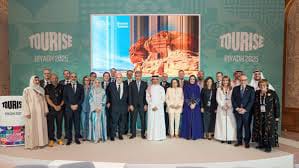
Category: Tourism Development | Travel Industry
By: Ephraim Success
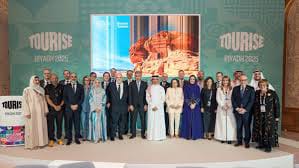
Saudi Arabia is rapidly expanding tourism as part of its economic diversification strategy. What lessons can Nigeria learn from the Kingdom’s tourism transformation?
For decades, Saudi Arabia’s global economic identity was closely associated with oil.
Today, the Kingdom is working to build another identity: a major global tourism destination.
Through its Vision 2030 programme, Saudi Arabia has invested heavily in tourism, hospitality, culture, entertainment, infrastructure and major events as part of a broader strategy to diversify its economy.
The results have been significant.
According to Saudi Arabia’s official Vision 2030 2025 Annual Report, the Kingdom recorded 123 million tourists in 2025 and $81 billion in tourism spending.
For Nigeria, another major oil-producing country seeking greater economic diversification, Saudi Arabia’s experience raises an important question:
What can Nigeria learn from a country that is deliberately turning tourism into an economic pillar?
SAUDI ARABIA’S TOURISM TRANSFORMATION
Tourism is a major component of Saudi Arabia’s Vision 2030 strategy.
The Kingdom has invested in tourism infrastructure and developed new attractions while promoting its cultural heritage, natural landscapes, entertainment industry and major events.
Its official tourism strategy highlights projects and investments intended to position Saudi Arabia as a world-class destination.
The country’s tourism growth has been accompanied by efforts to make it easier for international visitors to enter and experience the Kingdom.
This represents a major change in how Saudi Arabia presents itself to the world.
The country is no longer relying only on its traditional image.
It is actively creating and marketing new reasons for people to visit.
TOURISM AS ECONOMIC DIVERSIFICATION
The most important lesson for Nigeria is perhaps the simplest:
Tourism can be treated as an industry.
A tourist does not spend money in only one place.
A typical trip can involve:
- Flights
- Hotels
- Restaurants
- Transportation
- Attractions
- Tour guides
- Entertainment
- Shopping
- Cultural experiences
This creates a wide economic chain.
Hotels employ people.
Restaurants purchase food.
Tour operators employ guides and drivers.
Artisans sell products.
Transportation companies carry visitors.
Local attractions charge entrance fees.
The economic impact therefore spreads beyond the attraction itself.
SAUDI ARABIA IS SELLING EXPERIENCES
Another important lesson is that successful destinations do not simply sell locations.
They sell experiences.
Saudi Arabia has been developing and promoting tourism around its natural landscapes, heritage, culture, entertainment and major events.
Its strategy shows that a destination becomes more attractive when visitors have clear reasons to travel there.
Nigeria can apply the same principle.
A waterfall can become a nature-and-adventure experience.
A historical site can become a heritage tour.
A festival can become an annual cultural tourism product.
A beach can become part of a weekend getaway.
A food tradition can become a culinary tourism experience.
The attraction is only the starting point.
The experience is the product.
NIGERIA ALREADY HAS THE RAW MATERIALS
Nigeria does not have to create attractions from scratch.
The country already possesses a diverse collection of tourism assets.
Culture
Nigeria’s cultural diversity provides enormous potential for festivals, traditional arts, music, dance, fashion and cultural experiences.
History
Historic cities, heritage sites, royal institutions and important archaeological and cultural locations provide opportunities for heritage tourism.
Nature
Nigeria has beaches, forests, waterfalls, mountains, caves, springs and other natural attractions.
Food
Nigerian cuisine is increasingly gaining international attention and could support a much larger culinary tourism industry.
Entertainment
Nigeria’s music and film industries already have international audiences.
This provides a natural bridge between entertainment and tourism.
The recent partnership between Ikogosi Warm Springs Resort and AFRIMMA 2026 is an example of this connection. The resort is using the international African music event to promote its tourism and hospitality offering to audiences outside Nigeria.
INFRASTRUCTURE IS PART OF THE EXPERIENCE
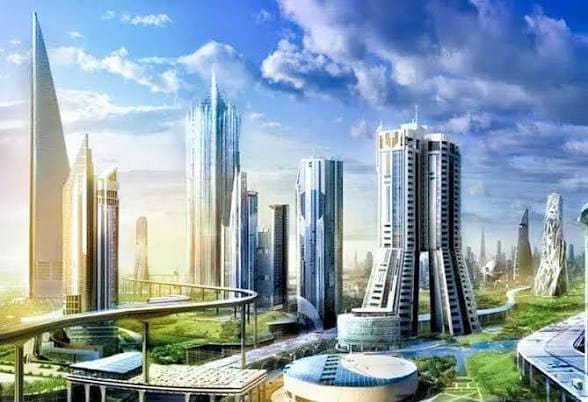
Having attractions is not enough.
Tourism depends heavily on infrastructure.
Visitors need to be able to reach destinations comfortably.
They need accommodation.
They need reliable transportation.
They need information.
They need sanitation and visitor facilities.
They need safety.
They need clear signage and, increasingly, digital access to information and booking services.
This is where tourism development becomes more complex.
A beautiful attraction with poor accessibility may struggle to attract visitors consistently.
Nigeria therefore needs to think about tourism infrastructure as part of the tourism product itself.
DESTINATION MARKETING MATTERS
Another lesson from Saudi Arabia is the importance of destination marketing.
A destination can have extraordinary attractions and still receive relatively few visitors if potential travellers do not know about them or do not understand what they can experience there.
Nigeria has thousands of attractions and experiences, but many remain under-promoted.
This is why initiatives such as Ember to Remember 2026 are important.
The Federal Government’s 100-day tourism season is designed to bring together festivals, concerts, cultural celebrations, destinations and tourism experiences and make them part of a coordinated national tourism story.
The idea is not simply to tell people that Nigeria has attractions.
It is to give people reasons to visit them.
GOVERNMENT CANNOT DO IT ALONE
Tourism development requires cooperation between government and the private sector.
Government has responsibilities around:
- Policy
- Infrastructure
- Regulation
- Security
- Destination development
- Investment incentives
The private sector can contribute through:
- Hotels
- Tour operations
- Attractions
- Transportation
- Restaurants
- Technology
- Entertainment
- Destination marketing
Travel agencies also have a role because they connect destinations and tourism products directly to consumers.
This collaboration is particularly important if Nigeria wants tourism to become a major economic sector rather than a collection of isolated attractions.
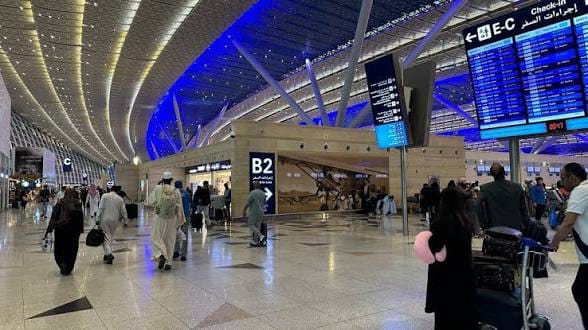
NIGERIA SHOULD LEARN, NOT COPY
Saudi Arabia’s strategy provides useful lessons, but Nigeria should not attempt to copy the Kingdom’s approach word for word.
The two countries have different geography, cultures, demographics, economies and tourism assets.
Nigeria needs its own tourism model.
However, several principles can be adapted.
- Treat tourism as an economic sector
Measure tourism by jobs, investment, visitor spending and business growth, not simply visitor numbers.
- Develop complete destinations
Attractions need transportation, accommodation, sanitation, safety and visitor services.
- Package experiences
Turn individual attractions into complete tourism products.
- Promote domestic tourism
Nigerians should be encouraged to become customers of Nigerian tourism businesses.
- Improve international destination marketing
Nigeria’s tourism story should reach potential visitors beyond the country.
- Invest in people
Professional tour guides, hospitality workers, travel consultants and tourism managers are essential to a quality visitor experience.
- Embrace technology
Travellers increasingly expect to discover, compare and book experiences digitally.
THE NUMBERS SHOW WHAT IS POSSIBLE
Saudi Arabia’s progress demonstrates the scale tourism can reach when it receives sustained strategic attention.
The Kingdom’s official 2025 Vision 2030 report records 123 million tourists and $81 billion in tourism spending in 2025.
That does not mean Nigeria can simply reproduce the same numbers.
It does, however, demonstrate that tourism can become a serious economic industry when supported by policy, investment, infrastructure and destination development.
Nigeria has its own advantages.
It has a huge domestic market.
It has cultural diversity.
It has a globally recognised entertainment industry.
It has natural and historical attractions.
And it has a population with significant potential to drive domestic tourism.
THE ROAD AHEAD FOR NIGERIA
Nigeria’s tourism future will not be determined by how many attractions the country has.
It will be determined by what happens around those attractions.
Can visitors reach them easily?
Can they find reliable information?
Can they book accommodation?
Can they access quality tour guides?
Can they enjoy the experience safely?
Can local communities benefit economically?
Can the destination be marketed effectively?
These questions are just as important as the attractions themselves.
Saudi Arabia’s tourism transformation offers Nigeria an important lesson.
Economic diversification is not simply about identifying another source of revenue.
It is about building an entire ecosystem around a new industry.
Nigeria already has many of the ingredients needed for a strong tourism sector.
The challenge is turning those ingredients into well-developed, accessible and marketable experiences.
Nigeria does not need to become another Saudi Arabia.
It needs to build a tourism industry that reflects Nigeria’s own culture, people, landscapes and identity.
If that happens, tourism could become far more than a way for people to spend their holidays.
It could become an important contributor to jobs, investment, local businesses and economic diversification.
The opportunity is already here. The question is how seriously Nigeria chooses to pursue it.