

By: Ephraim Success
Travel has always been influenced by more than beautiful beaches, iconic landmarks and attractive hotel deals.
Behind every flight route and holiday booking is a world shaped by politics, economics and international relations. When conflict breaks out, borders change, airspace closes or tensions rise between countries, the effects are quickly felt by the tourism industry.
In 2026, this relationship has become particularly visible.
From the war involving Iran and the wider Middle East tensions to the continuing Russia-Ukraine conflict, geopolitical events are reshaping airline routes, influencing destination choices, increasing travel costs and changing how far in advance people are willing to plan their holidays.
The global travel map is changing, and travellers are changing with it.
THE MIDDLE EAST CONFLICT: WHEN A REGIONAL CRISIS BECOMES A GLOBAL TRAVEL ISSUE
One of the clearest examples is the ongoing conflict involving Iran and the wider Middle East.
The conflict has forced airlines to avoid sections of Middle Eastern airspace, resulting in longer routes, higher fuel consumption and operational disruption. The effects have extended well beyond the countries directly involved in the fighting.
For travellers, this can mean longer journeys, higher fares, cancellations and uncertainty.
The impact is also being felt by destinations that are not directly involved in the conflict.
Turkey and Cyprus, for instance, have experienced weaker demand during the 2026 summer season as some travellers became more cautious about holidaying relatively close to the conflict zone. Turkey’s tourist arrivals declined 2.4% year-on-year between January and June, while Cyprus experienced a sharper 10% decline.
Interestingly, the crisis has also produced a new travel behaviour: last-minute booking.
Travel companies have reported that some consumers are delaying their decisions until they have a clearer picture of the security situation. TUI has also reported increased last-minute holiday bookings amid geopolitical uncertainty and the pressure of higher living costs.
This demonstrates an important change in traveller psychology.
People are not necessarily giving up on travel.
They are simply becoming more cautious about when and where they commit their money.
RUSSIA-UKRAINE: HOW WAR CAN REDRAW THE AVIATION MAP
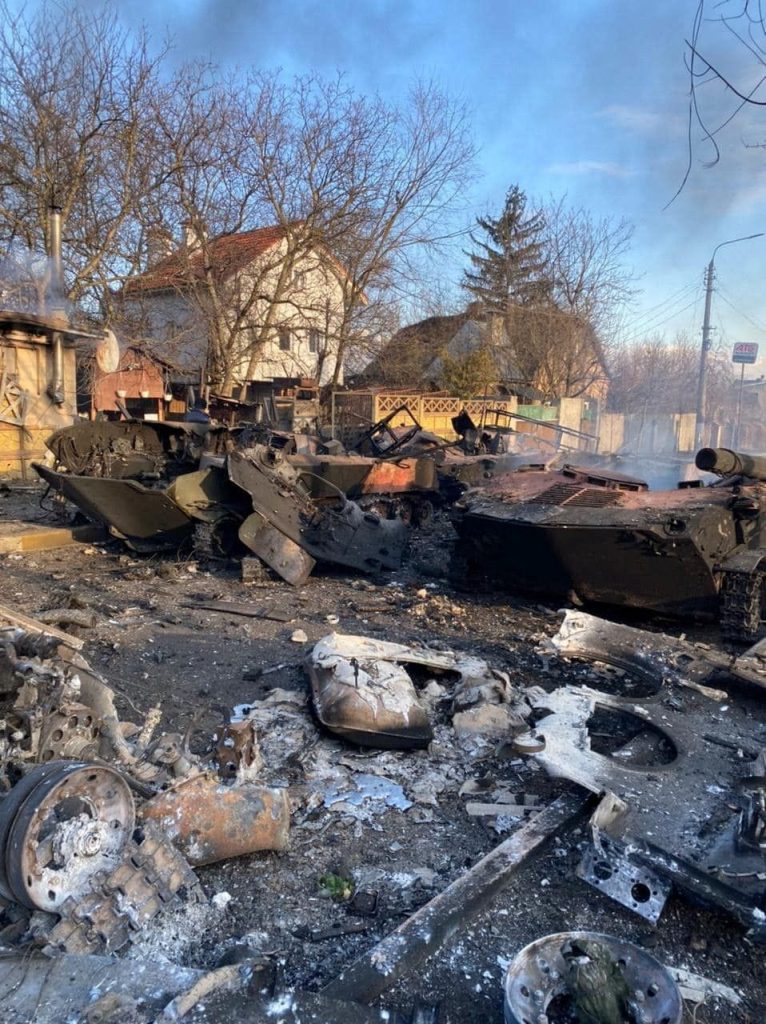
The Russia-Ukraine war provides another powerful example.
The closure or restriction of airspace has forced airlines to alter routes around affected areas. Longer journeys mean increased fuel consumption, additional operating costs and, in some cases, higher ticket prices. Research into the conflict’s impact on global aviation has found significant increases in flight costs on affected international routes.
But the consequences go beyond aviation.
The war has changed perceptions of travel in parts of Eastern Europe and affected tourism demand in destinations considered geographically or psychologically close to the conflict.
Within Russia itself, popular Black Sea holiday destinations have also experienced disruption. In 2026, security concerns, fuel shortages and the risk of drone attacks have contributed to cancellations and weakened tourism in areas including Crimea and Anapa.
The lesson is significant:
A conflict does not have to happen inside a tourist destination to affect its tourism industry.
Perception of proximity can be enough.
THE RED SEA AND THE COST OF TAKING THE LONG WAY AROUND
Another example is the security situation around the Red Sea.
The region is strategically important for both shipping and international connectivity. When security risks increase, airlines and shipping companies can be forced to reconsider their routes.
For airlines, avoiding risky airspace can mean taking longer paths.
For shipping companies, avoiding dangerous maritime routes can increase transportation times and costs.
Eventually, some of these costs find their way into the tourism industry through higher fuel prices, transportation costs, package holidays and other travel expenses.
This demonstrates how geopolitics can affect tourism indirectly.
A traveller does not need to visit a conflict zone to feel its economic consequences.
TRAVELLERS ARE PUTTING SAFETY HIGHER ON THE LIST
Perhaps the biggest change is psychological.
Travellers are increasingly asking questions that go beyond:
“Is this destination beautiful?”
They are asking:
- Is it safe?
- Could flights be disrupted?
- What happens if the situation escalates?
- Will my travel insurance cover me?
- Can I leave easily if the situation changes?
- Is there an alternative destination?
Recent European travel research found that destination safety has become an increasingly important consideration, with 22% of respondents identifying it as their top consideration, up from the previous year.
This means destination marketing is changing too.
Beautiful photographs and attractive hotel packages may no longer be enough.
Travellers want reassurance.
TRAVELLERS ARE MOVING TOWARDS “SAFER ALTERNATIVES”
When geopolitical tensions make a destination less attractive, travellers do not necessarily stop travelling.
Instead, they often look for alternatives.
A traveller who planned a holiday somewhere perceived as risky may choose another country with a similar climate, culture or experience.
A beach lover might move from one Mediterranean destination to another.
A traveller interested in history might choose a different historical city.
Someone looking for a luxury Middle Eastern experience might consider a destination outside the immediate conflict zone.
This is creating a substitution effect in tourism.
The decline of one destination can become the opportunity of another.
For emerging destinations, this is particularly important.
Countries that can offer compelling experiences while maintaining strong safety perceptions may attract travellers who are reconsidering traditional favourites.
TRAVEL PLANNING IS BECOMING MORE FLEXIBLE
Geopolitical uncertainty is also changing the way people book.
Instead of making highly detailed travel plans months in advance, some travellers are waiting longer before committing.
Others are choosing refundable accommodation, flexible airline tickets and travel insurance.
The increase in last-minute bookings reported by travel companies in 2026 is evidence of this shift.
This creates both opportunities and challenges for travel businesses.
Hotels and airlines may need to become more flexible with pricing and cancellation policies, while travel agents increasingly need to monitor international developments and advise clients accordingly.
AIRLINES ARE HAVING TO BECOME MORE RESILIENT
For airlines, geopolitical instability means that the traditional concept of a fixed route network is becoming more complicated.
An airline may have to suddenly avoid a particular airspace, reroute aircraft, cancel services or find alternative connections.
And because aircraft, crews and airport slots are all interconnected, one disruption can create a chain reaction across an airline’s network.
The current Middle East situation has demonstrated how quickly this can happen, with airlines facing rerouting, cancellations and increased operational costs.
In the future, flexibility may become one of the most important assets an airline can have.
AFRICA COULD BENEFIT FROM THE SHIFT
For African tourism, changing global travel patterns could present an opportunity.
Travellers who are reconsidering destinations affected by geopolitical uncertainty may begin looking elsewhere.
Countries across Africa have the potential to attract these travellers through cultural tourism, wildlife, beaches, adventure tourism, food experiences and heritage.
Nigeria, in particular, has an opportunity to strengthen its domestic and international tourism offering.
From Lagos and Calabar to Abuja, Abeokuta, Osogbo and other destinations, there are experiences capable of attracting both local and international travellers.
But opportunity alone is not enough.
To benefit from changing travel patterns, destinations need reliable infrastructure, clear travel information, competitive pricing, strong destination marketing and, most importantly, traveller confidence.
GEOPOLITICS IS ALSO CHANGING THE BUSINESS OF TOURISM
The modern travel company can no longer focus exclusively on selling destinations.
It must also understand the environment surrounding those destinations.
A travel consultant arranging an international trip needs to be aware of visa changes, airline disruptions, government travel advisories, border restrictions and regional developments.
Travel insurance is becoming more important.
Flexible booking options are becoming more valuable.
And real-time communication with clients is becoming essential.
In other words, travel businesses are increasingly becoming risk-management businesses as well as tourism businesses.
THE NEW TRAVEL MAP
The world has never had a completely predictable travel map.
Wars, diplomatic disputes, pandemics, economic crises and natural disasters have always influenced tourism.
But today’s highly connected world means the effects can travel much further and much faster.
A conflict thousands of kilometres away can change the price of a flight.
A closed airspace can add hours to a journey.
A security warning can empty hotel rooms.
A viral news report can make travellers reconsider an entire region.
And a traveller who cancels one destination can create an unexpected opportunity for another.
This is why the future of tourism will not be determined solely by which destinations have the most beautiful attractions.
It will also be determined by which destinations travellers perceive as accessible, affordable, stable and safe.
WHAT SHOULD TRAVELLERS DO?
Geopolitical uncertainty does not mean travellers should stop travelling.
It means they should travel more intelligently.
Before booking an international trip, travellers should research current entry requirements, monitor official travel advisories, check airline updates and understand their travel insurance coverage.
They should also avoid relying solely on social media for safety information.
Most importantly, travellers should remain flexible.
The destination you originally planned to visit may not always be the best choice when circumstances change.
Sometimes, the smartest travel decision is not cancelling the journey.
It is changing the destination.
THE FUTURE OF TRAVEL IS FLEXIBLE
Geopolitical events are proving that travel patterns can change almost overnight.
The Iran conflict has affected flight routes and holiday demand across the wider region. The Russia-Ukraine war continues to influence aviation and tourism in Europe and beyond. Red Sea insecurity has demonstrated how regional instability can affect global transportation.
Yet one thing remains remarkably consistent:
People still want to travel.
They may change the destination.
They may travel later.
They may choose a closer country.
They may spend less.
They may look for more flexible bookings.
But the desire to explore the world remains.
And that may be the most important lesson for the travel industry.
The future will not necessarily belong to the destinations that simply attract the most tourists.
It may belong to the destinations and travel companies that can adapt fastest when the world changes.