
By: Ephraim Success
For decades, airports served one purpose: getting passengers from one destination to another. Travelers rushed through check-in counters, hurried toward departure gates, and viewed long layovers as an inconvenience rather than an opportunity.
That perception has changed dramatically.
Today, many of the world’s leading airports are destinations in their own right. From indoor waterfalls and botanical gardens to museums, luxury shopping, fine dining, wellness centers, and entertainment complexes, airports have evolved into attractions capable of drawing visitors who are not even catching a flight.
The modern airport is no longer just the beginning or end of a journey. Increasingly, it has become part of the travel experience itself.
The Evolution of the Airport Experience
The transformation of airports has been driven by changing traveler expectations and increased competition among global aviation hubs.
As international travel expanded, airports realized that simply moving passengers efficiently was no longer enough. Travelers wanted comfort, convenience, entertainment, and memorable experiences during transit. At the same time, airports recognized the growing importance of non-aviation revenue from shopping, dining, hotels, and attractions.
Rather than functioning solely as transport infrastructure, airports began investing in architecture, lifestyle facilities, cultural experiences, and leisure attractions designed to encourage passengers to spend more time—and more money—inside their terminals. These investments have also made airports attractive destinations for local residents and tourists without flight reservations.
Why Airports Are Becoming Tourist Attractions
- Architecture Worth Visiting
Modern airports are increasingly designed as architectural landmarks.
Expansive glass domes, striking terminal designs, sustainable engineering, and public art installations have turned many airports into icons of contemporary architecture. Travelers now photograph terminals with the same enthusiasm once reserved for famous museums or skyscrapers.
For many visitors, the airport itself has become the first sightseeing stop after landing.
- Entertainment Beyond Boarding Gates
Long layovers used to mean hours of waiting.
Today, many airports offer attractions that rival city entertainment districts, including:
- Indoor gardens
- Observation decks
- Interactive museums
- Art galleries
- Cinema theaters
- Children’s play zones
- Wellness spas
- Fitness facilities
- Luxury lounges
- Live cultural performances
Instead of counting down the minutes before departure, travelers often wish they had more time to explore.
- World-Class Shopping and Dining
International airports increasingly feature luxury boutiques alongside local brands, allowing visitors to shop for global fashion labels as well as authentic regional products.
Dining has also evolved beyond standard fast food. Many airports now showcase award-winning restaurants, celebrity chefs, local cuisine, gourmet cafés, and specialty dessert outlets that give visitors a taste of their destination before they even leave the terminal.
For food lovers, an airport can serve as a culinary introduction to an entire country.
- Nature in Unexpected Places
One of the most remarkable airport trends is the integration of natural environments into terminal design.
Indoor forests, living walls, butterfly gardens, rooftop parks, waterfalls, and botanical displays help reduce stress while creating unforgettable visual experiences.
Research has shown that natural environments contribute positively to passenger comfort, making these features both practical and visually impressive.
Airports Leading the Trend
Singapore Changi Airport: The Global Benchmark
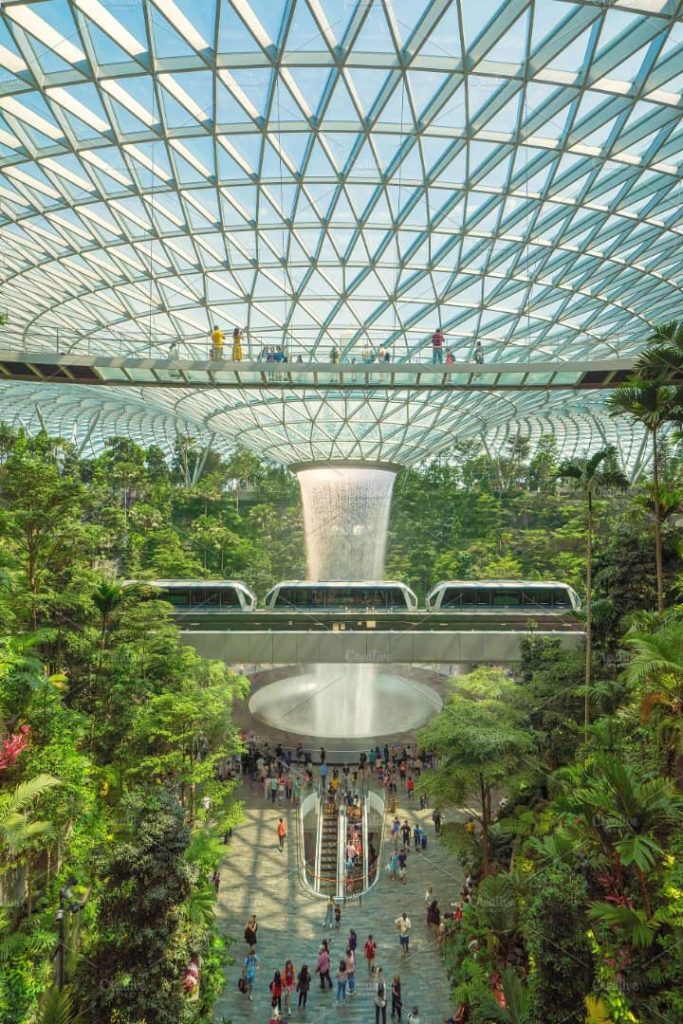
Few airports illustrate this transformation better than Changi Airport in Singapore.
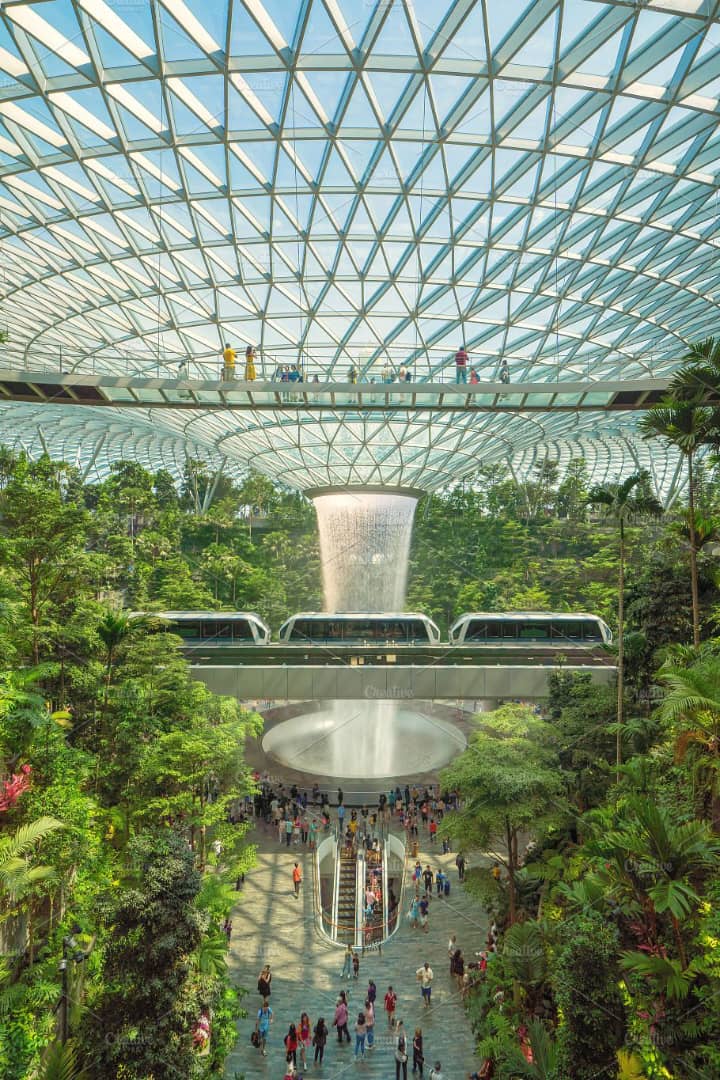
At its heart is Jewel, a lifestyle destination connected to the airport that combines retail, entertainment, nature, accommodation, and dining under one spectacular roof. Jewel features the iconic Rain Vortex—the world’s tallest indoor waterfall—surrounded by the lush Forest Valley, Canopy Park, mazes, walking nets, gardens, and interactive attractions. Opened in 2019, Jewel now attracts tens of millions of visitors annually, including both travelers and local residents.
For many visitors to Singapore, spending several hours at Jewel is an attraction in its own right rather than simply part of an airport stopover.
Hamad International Airport, Qatar
Doha’s Hamad International Airport has transformed transit into a luxury experience.
Its expansive terminal features high-end shopping, art installations, quiet relaxation areas, premium lounges, family facilities, and elegant architecture. The airport regularly ranks among the world’s best for passenger experience and has become a popular stopover destination for travelers flying between Europe, Africa, Asia, and Australia.
Istanbul Airport, Türkiye
One of the world’s largest aviation hubs, Istanbul Airport offers travelers more than efficient connections.
Passengers can enjoy extensive shopping, museums, premium dining, sleep pods, and modern passenger facilities that make long layovers significantly more comfortable. Recent additions such as rentable sleeping pods reflect a growing emphasis on traveler wellbeing during extended transit.
Incheon International Airport, South Korea
Frequently recognized for service excellence, Incheon combines efficiency with cultural experiences.
Visitors can enjoy Korean cultural exhibitions, traditional performances, relaxation facilities, shopping, and wellness amenities that introduce travelers to Korean culture before they even leave the airport.
Airports as Part of the Vacation
A growing number of travelers intentionally schedule longer layovers to experience airport attractions.
Instead of booking the shortest possible connection, passengers may choose six to twelve-hour stopovers that allow them to explore airport facilities, dine at renowned restaurants, enjoy spas, or even spend a night at an airport hotel.
This trend has become particularly attractive for long-haul travelers seeking to break up exhausting journeys.
For airports, these extended visits generate additional revenue while improving the overall passenger experience.
Social Media Has Accelerated the Trend
Platforms such as Instagram, TikTok, Facebook, and YouTube have played a significant role in changing public perception of airports.
Videos featuring indoor waterfalls, futuristic terminals, luxury lounges, rooftop gardens, and airport attractions have reached millions of viewers worldwide.
Many travelers now include famous airports on their travel bucket lists, demonstrating how social media has helped redefine airports as destinations rather than merely transport facilities.
Benefits for Tourism
Destination airports create economic opportunities that extend beyond aviation.
Benefits include:
- Increased tourism spending
- Longer stopovers
- Greater retail revenue
- More hotel bookings
- Job creation
- Stronger destination branding
- Improved international reputation
For countries positioning themselves as global travel hubs, investing in airport experiences has become an effective tourism strategy.
Challenges to Consider
While airport tourism offers numerous benefits, it also presents challenges.
Managing growing visitor numbers without disrupting passenger operations requires careful planning. Airports must balance security requirements with accessibility while maintaining smooth passenger flow.
Sustainability is another key consideration. Large attractions consume energy and resources, making environmentally responsible design increasingly important for future airport developments.
What This Means for Travelers
Modern travelers are beginning to rethink how they plan their journeys.
Instead of viewing airports as places to rush through, many now intentionally arrive several hours early, schedule longer connections, or even visit airport attractions without boarding a flight.
For anyone planning international travel, researching an airport’s attractions can become just as worthwhile as researching the destination itself.
The Future of Airport Tourism
The world’s leading airports are continuing to expand beyond transportation.
Future developments are expected to include more immersive entertainment, digital experiences powered by artificial intelligence, enhanced wellness facilities, sustainable architecture, cultural exhibitions, smart technology, and integrated lifestyle spaces.
As airports compete for global recognition, the distinction between transportation hub and tourist attraction will continue to fade.
Conclusion
The airport of today is no longer merely a gateway to somewhere else—it is increasingly part of the destination itself.
Whether exploring the lush indoor forests of Singapore’s Jewel, relaxing in a luxury lounge in Doha, discovering cultural exhibitions in Seoul, or enjoying world-class dining during a layover, travelers are finding that some of their most memorable travel experiences now begin before they even leave the terminal.
In an era where experiences matter as much as destinations, airports have successfully reinvented themselves—not simply as places to catch flights, but as attractions worthy of a visit in their own right.